If you are looking at Newton multi-family homes as an investment, you are probably asking a simple question: will the numbers work in a market known more for stability than bargains? That is a fair concern. Newton can offer strong long-term appeal, but it is also a tightly built, highly regulated market where smart underwriting matters. In this guide, you will learn what drives rental demand, how zoning can shape your options, and where investors need to be especially careful before moving forward. Let’s dive in.
Why Newton Attracts Multi-Family Investors
Newton stands out as a high-income, mostly owner-occupied market with a meaningful rental base. The city has 10,442 rental units, which make up about 31% of its housing, while the owner-occupied rate is 71.0%. Median gross rent is $2,388, and median household income is $184,989.
Those numbers help explain why Newton often appeals to investors looking for durability more than outsized yield. This is usually not a market where you buy at a discount and create a big spread quickly. It is more often a market where location, quality, and long-term hold strategy matter most.
Newton also benefits from a broad local demand base. The city has about 90,700 residents, with a mix of households that includes younger adults, families, and older residents. Census data also shows 23.5% of residents are foreign-born and 27.5% of households speak a language other than English at home, which points to a diverse and internationally connected renter pool.
What Supports Rental Demand in Newton
Newton’s layout is a big part of the story. The city is built around village centers near rail stops, and it also has employment clusters tied to universities, Newton-Wellesley Hospital, Newton Corner, and Wells Avenue. That means rental demand is often connected to transit access, local employment, and commuting convenience.
The city’s own housing planning also points to a wide range of likely renters for multifamily housing. Newton says these homes are intended to serve families with children, middle-income households, elderly downsizers, and young adults. For an investor, that matters because it suggests demand is not tied to just one narrow renter profile.
Income levels among renter households are also more mixed than some buyers assume. Newton’s housing needs analysis shows that 39.8% of two-person renter households are above 120% of area median income, while 21.0% are extremely low income or below. In practice, that means some properties may align best with market-rate demand, while others may be more sensitive to affordability and operating costs.
Expect a Constrained-Supply Market
Newton is mostly built out, with little undeveloped land left. The city says much of its residential zoning dates back to the 1950s, and the zoning ordinance was last significantly updated in 1987. That combination tends to limit new supply and support long-term value.
For investors, this is one of the clearest takeaways. Newton multi-family homes are typically priced for resilience and appreciation potential, not for high cash flow. Thin inventory and a smaller buyer pool can make the right property competitive when it comes to market.
Public listing data in the research report shows a small number of Newton apartment-building listings, with an average asking price near $474 per square foot and an average asking cap rate of 4.97%. Nearby examples in the report range from 5.15% to 6.17% asking cap rates. These are asking figures, not closed-sale results, but they still reinforce the broader pattern: Newton is generally a lower-cap-rate market.
Cap Rates and Return Expectations
If you are new to multifamily investing, Newton can be a market where expectations need to stay realistic. The city’s own planning materials use a 4.50% cap-rate assumption in village-center feasibility studies. That is not the same as a sales comp, but it does offer another useful signal about how local economics are being viewed.
In plain terms, you should not expect Newton to behave like a high-yield market. Returns often depend more on steady occupancy, thoughtful rent positioning, disciplined expenses, and long-term appreciation. Investors who do well here are usually focused on quality assets and patient strategy.
This is also where financing insight matters. A property with modest cap rates can still make sense if the building quality, location, and long-term upside are strong. But when pricing is tight, a small underwriting mistake can have a bigger impact on your return.
Older Housing Stock Changes the Math
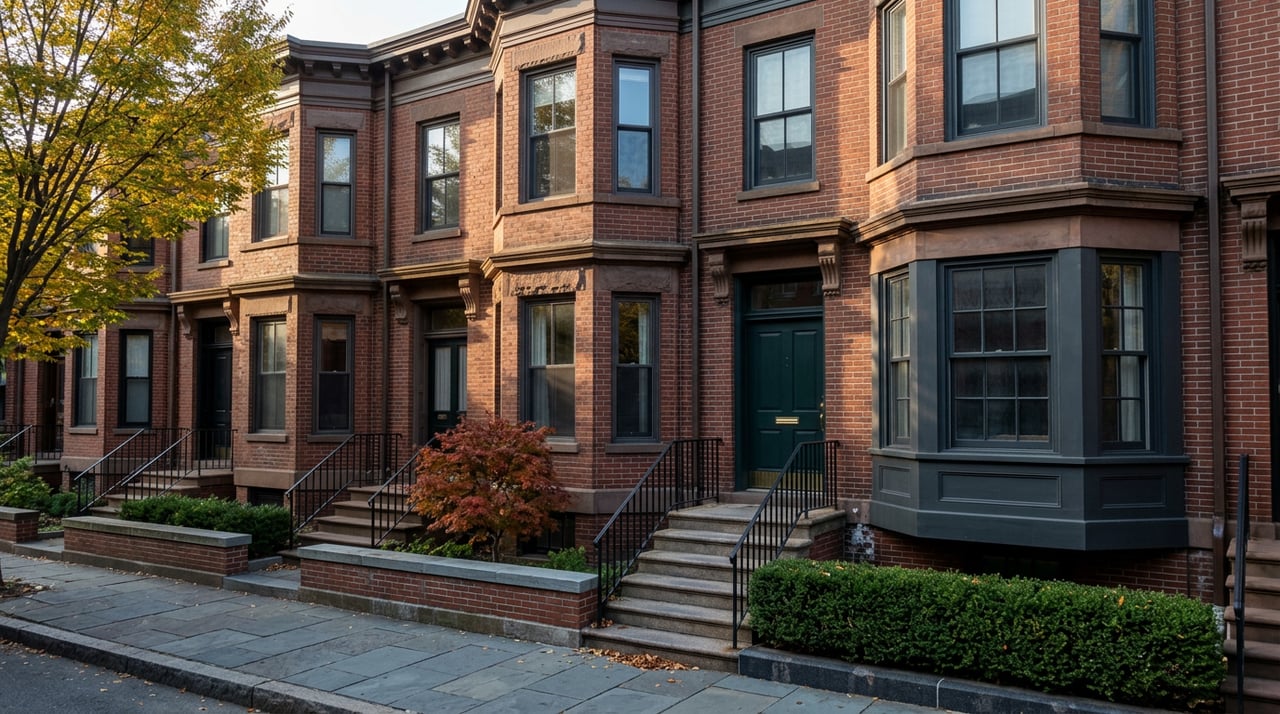
A major part of Newton’s multifamily story is age. According to the city’s market study, 52.1% of housing units were built in 1939 or earlier, and another 13.4% were built in the 1950s. That means many properties come with charm, but they may also come with deferred maintenance, outdated systems, or renovation needs.
Before you buy, budget carefully for systems work and modernization. Older buildings may need electrical updates, plumbing work, window replacement, insulation improvements, or layout changes to stay competitive. If the property is older, lead-paint compliance should also be part of your review.
This is one reason Newton investing often rewards careful due diligence over quick decision-making. A building that looks appealing on the surface can become expensive if the renovation scope is not understood early.
Newton Zoning Can Make or Break a Deal
Zoning is one of the most important parts of underwriting a Newton multi-family purchase. Outside special overlay districts, the city says multi-family housing with more than two units always requires a special permit. That means a by-right path is often the exception, not the rule.
For investors considering conversion, expansion, or redevelopment, this can be a major issue. A deal that looks attractive financially may be much harder to execute if zoning relief is needed. You want to understand that risk before you get too far.
Newton’s Village Center Overlay District, adopted on December 4, 2023, is the key local exception. It allows by-right multifamily housing near seven transit stations: Auburndale, West Newton, Newtonville, Newton Centre, Newton Highlands, Eliot, and Waban.
Within that framework, the city includes Multi Residence Transit zoning for 4-to-6-unit residential buildings, along with VC2 and VC3 districts for taller residential and mixed-use buildings. Even so, some projects may still require site plan review or a special permit, and parking waivers can be part of the review process.
What to Check Before You Underwrite
Before moving forward on a Newton multi-family opportunity, confirm the parcel’s zoning and dimensional limits. The city uses floor area ratio, setbacks, height, lot coverage, and open space as key controls. Those rules can affect whether you can add units, enlarge a structure, or reconfigure the building.
For smaller investors, ADU and de minimis rules may also create opportunities. Newton defines an ADU as a smaller self-contained unit on the same lot as a primary residence, and it allows some de minimis changes to legally nonconforming residential buildings by right if size and setback rules are met. These paths can be useful, but they still require careful zoning review.
Inspectional Services also plays an important role in due diligence. The department enforces zoning and the building code and issues permits for construction, alteration, repair, demolition, and occupancy. In practical terms, that means you should review permit history and any open issues alongside leases, operating numbers, and the physical condition of the building.
Energy Code Rules Matter More Now
Renovation planning in Newton now requires close attention to energy code rules. The city says complete building permit applications received after January 1, 2024 are subject to the Specialized Stretch Code. That rule affects new construction and major renovations.
Newton also says new construction and major renovations must use electricity instead of fossil fuels for heating, cooling, cooking, clothes drying, and hot water. Starting January 1, 2026, major renovations and additions over 1,000 square feet must be fully all-electric, with no natural gas cooking option.
For investors, this can significantly affect renovation budgets and project design. If you are evaluating a heavy value-add deal, all-electric requirements should be built into your scope early rather than treated as a surprise later.
Condo Conversion Needs Legal Review
Some buyers look at Newton multifamily with a future condo exit in mind. That can be a valid strategy, but Massachusetts conversion rules add complexity. The state guidance in the research report says the major condo conversion provisions apply to condos and co-ops and do not apply to buildings with fewer than four residential units.
The same guidance also notes that tenants may have a period to purchase on terms at least as favorable as those offered to the general public. Because of that, any renovation-to-condo plan should be reviewed carefully with the right legal professionals before you assume an exit path will be simple.
Fair Housing Compliance Is Essential
If you plan to rent or reposition a Newton multifamily property, fair housing compliance needs to be part of your process from day one. Newton reminds landlords and sellers that protections cover families with children, subsidy recipients, and other protected classes. That applies to advertising, screening, and communication.
Good property operations are not just about rent collection and maintenance. They also depend on consistent policies, careful documentation, and respectful communication. That protects both your tenants and your investment.
Is Newton the Right Fit for Your Strategy?
Newton can be an excellent market for the right investor, but it helps to be honest about what kind of deal you want. If your goal is immediate high cash flow, Newton may feel tight. If your goal is to own in a high-income, transit-linked, supply-constrained market with long-term appeal, it can be a very compelling place to invest.
The best Newton multifamily opportunities are often the ones where the location is strong, the renovation plan is realistic, and the zoning path is clear. In a market like this, disciplined analysis usually matters more than chasing headline yield.
If you are weighing a Newton multifamily purchase and want local insight on value, zoning context, or deal positioning, Eric Glassoff can help you evaluate the opportunity with a practical, neighborhood-level lens.
FAQs
What makes Newton multi-family homes attractive to investors?
- Newton offers a mix of high household incomes, meaningful rental demand, transit-linked village centers, and constrained housing supply, which can support long-term stability and appreciation.
Are Newton multi-family properties usually high-cash-flow investments?
- Usually not. Based on the research report, Newton is generally a lower-cap-rate market where investors often focus more on long-term hold potential than large cash-on-cash returns.
Do Newton multi-family projects need special permits?
- Often, yes. Outside certain overlay districts, Newton says multi-family housing with more than two units always requires a special permit.
Where is by-right multifamily housing allowed in Newton?
- The Village Center Overlay District allows by-right multifamily housing near seven transit stations: Auburndale, West Newton, Newtonville, Newton Centre, Newton Highlands, Eliot, and Waban, though some projects may still need additional review.
Why do older Newton properties need extra due diligence?
- Many Newton housing units were built before 1940, so investors should budget for modernization, systems upgrades, and possible lead-paint compliance issues.
How do Newton energy code rules affect renovations?
- Newton’s Specialized Stretch Code and all-electric requirements can affect renovation scope, system choices, and budget, especially for major renovations and additions.
Can you convert a Newton multi-family building into condos later?
- Possibly, but Massachusetts condo conversion rules can add legal and tenant-related requirements, so that strategy should be reviewed carefully before you rely on it.
What should you review before buying a Newton multi-family property?
- At a minimum, review zoning, dimensional controls, permit history, building condition, renovation scope, rent roll, operating expenses, and any open code or occupancy issues.