If you are choosing between Newton and Brookline, you are not really choosing between "good" and "bad." You are choosing between two expensive, highly competitive Greater Boston markets that offer very different day-to-day experiences. The right fit usually comes down to how you want to live, commute, and use your space. In this guide, you’ll get a practical side-by-side look at pricing, housing, transit, and lifestyle so you can narrow your next move with more confidence. Let’s dive in.
Newton vs. Brookline at a Glance
Both Newton and Brookline sit in the same high-cost tier, and both remain very competitive for buyers. Census QuickFacts puts the median value of owner-occupied homes at $1,246,800 in Brookline and $1,264,900 in Newton, which shows how close they are at a broad level.
Recent market snapshots add more detail. In March 2026, Brookline’s median sale price was $1.65 million, while Newton’s all-home-types median sale price was $1.45 million. Brookline homes were also moving a bit faster on average, selling in about 19 days, while both markets were described as very competitive.
The simplest takeaway is this: Brookline currently reads as slightly pricier and a little faster-moving, while Newton still commands premium pricing but often feels a bit broader and less intense overall. If you are comparing the two, that small difference in pace can matter when you start touring homes and setting expectations.
Home Prices and Market Pace
Brookline pricing today
Brookline’s recent numbers suggest a market where buyers often need to move quickly. Redfin’s snapshot showed homes selling at about 100.1% of list price on average, which points to steady competition and limited room for hesitation.
That does not mean every property follows the same script. Condition, location within town, property type, and pricing strategy still shape the final result. Still, if you are searching in Brookline, it helps to be financially prepared and clear on your priorities before the right listing appears.
Newton pricing today
Newton is also expensive and competitive, but the market can feel a little more varied. With a median sale price of $1.45 million in March 2026, it remains firmly in the premium category, yet buyers may see a wider spread of housing options and home sizes.
That broader range can create more decision paths. You may be comparing older homes, updated properties, village-center locations, and larger lots, all within the same town. For many buyers, that variety is part of Newton’s appeal.
Housing Stock Feels Very Different
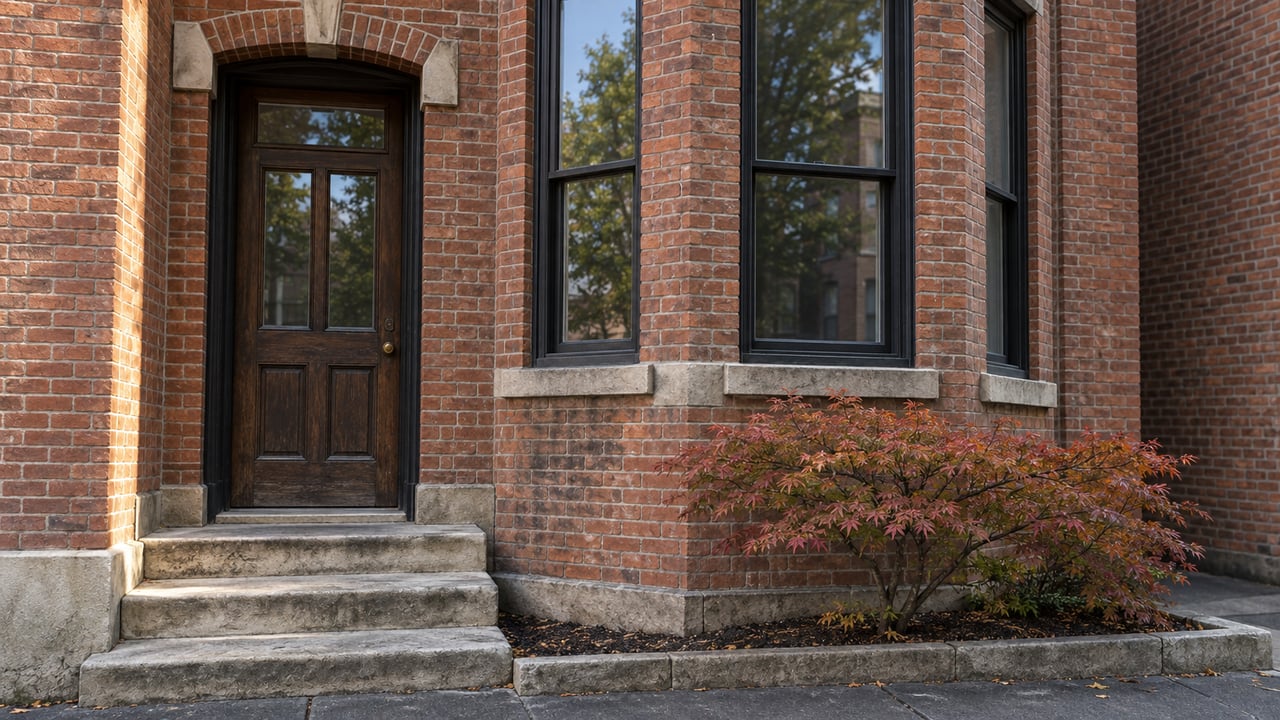
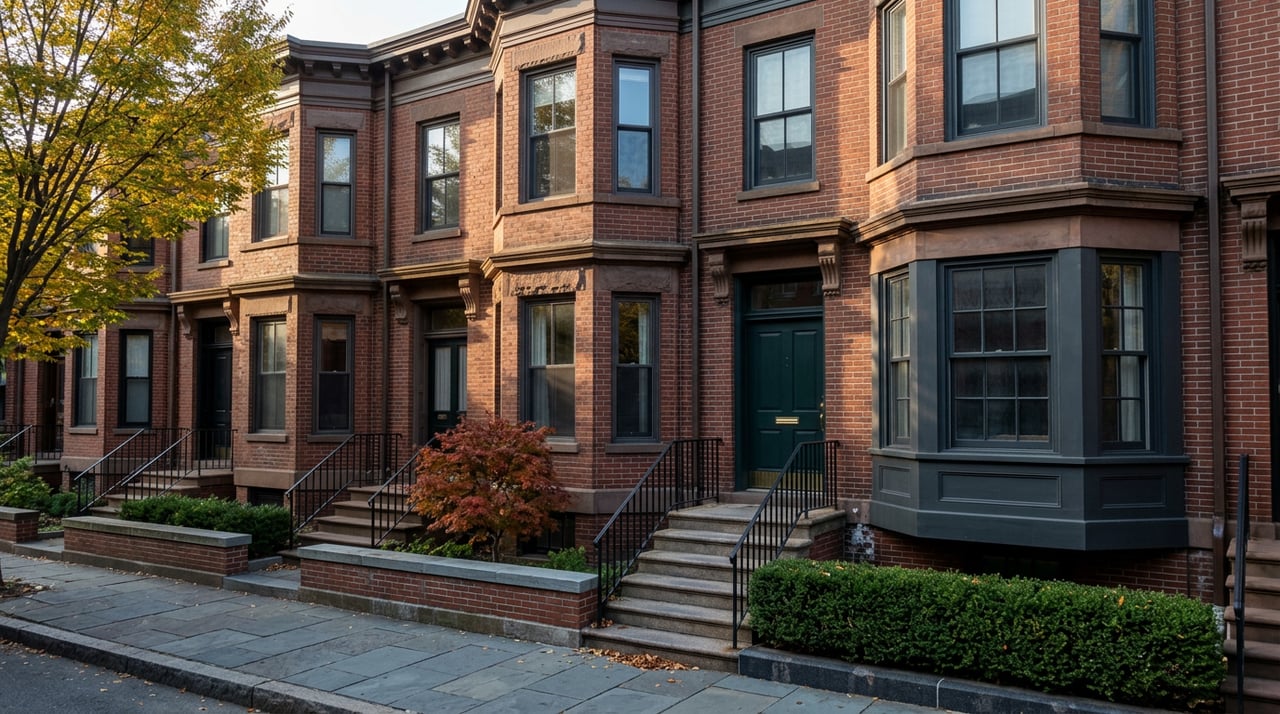
Brookline is denser and more compact
Brookline has a much denser physical layout than Newton. Census QuickFacts lists Brookline at 9,347.8 people per square mile, compared with 4,987.8 in Newton. Brookline also has about 6.76 square miles of land, which helps explain why it feels more compact and closely connected.
Its housing mix reflects that form. Brookline is more renter-heavy, with an owner-occupied housing rate of 46.9%, and its average household size is 2.24 people. In practical terms, that often translates to more condos, attached housing, and smaller-lot living than many buyers find in Newton.
Brookline’s 2024 Housing Production Plan also shows how constrained the town is structurally. Single-family districts account for 72% of town land, while apartment-house districts account for 12% and two-family districts for 10%, much of it concentrated around commercial areas in North Brookline. Because larger projects often require special permits, housing change tends to happen gradually.
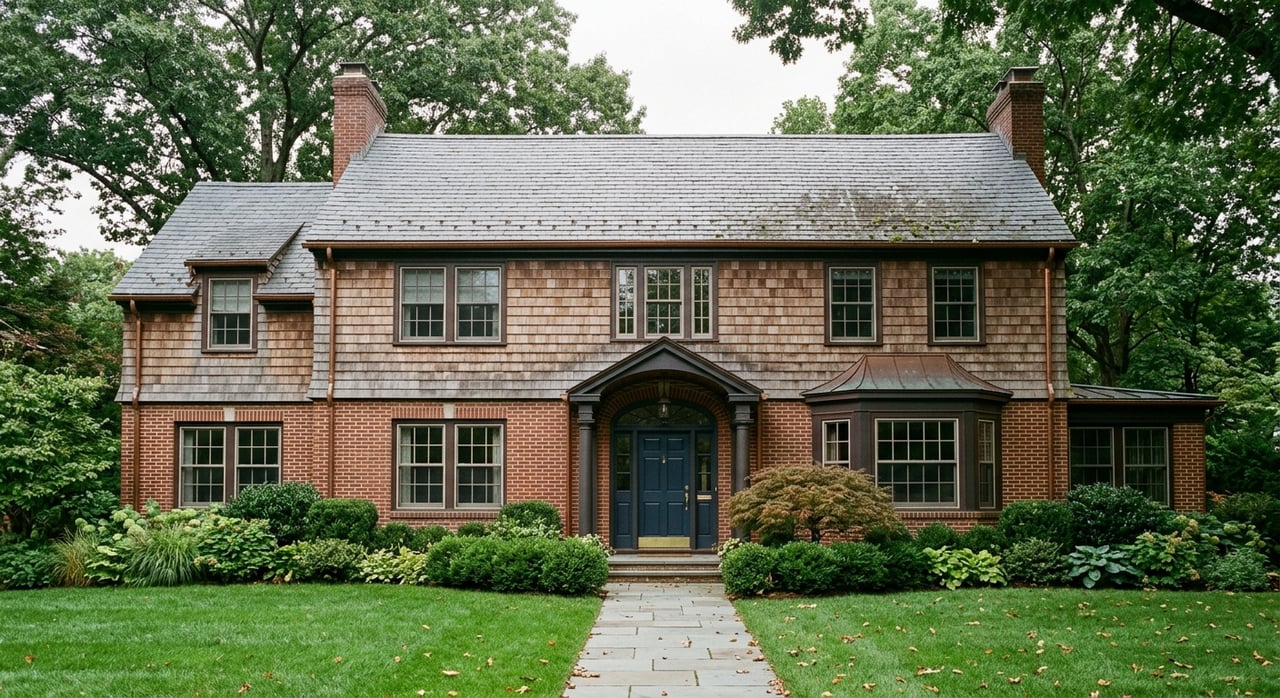
Newton offers more space and variety
Newton covers about 17.83 square miles, so its layout feels more spread out from the start. The owner-occupied housing rate is 70.0%, and the average household size is 2.56 people, both of which support its more suburban-residential feel.
The city’s zoning redesign materials describe a range of housing forms that shift by location, from larger lots with greater setbacks to more compact forms near village centers. Those materials also point to common housing types such as Victorian and Colonial homes, capes, bungalows, ranches, and duplexes.
If you are hoping for a detached home with more breathing room, Newton usually gives you more chances to find it. If you want a wider menu of home styles and lot patterns, Newton tends to offer more variation across neighborhoods and villages.
Typical Home Size Comparison
The size gap becomes clearer when you look at recent sold examples. Brookline sales included homes around 612, 1,169, and 1,655 square feet, along with larger homes from roughly 2,730 to 5,803 square feet.
Newton’s recent sold examples skewed larger, including homes at 1,471, 1,702, 2,556, 3,478, 4,836, 6,301, 6,343, and 7,236 square feet. That does not mean every Newton home is large or every Brookline home is compact. It does mean Newton more often serves buyers who want additional interior space.
For move-up buyers, this can be one of the biggest decision points. If you want to stretch into a larger single-family home, Newton may offer more realistic options. If you prefer a lower-maintenance condo, townhouse, or smaller-footprint property near transit and local amenities, Brookline may feel more natural.
Commute and Transit Options
Brookline is more subway-oriented
Brookline’s transportation network is especially appealing if you want a transit-first routine. The town is served by the MBTA Green Line C and D branches, with the B and E branches accessible at the edges of town. It also offers MBTA bus routes 51, 60, 65, and 66, along with BlueBikes, car sharing, and senior transportation options.
That setup can make Brookline feel especially convenient if your daily patterns rely on subway access and shorter in-town trips. If you like the idea of a compact, walkable town with strong connections into Boston, Brookline checks that box well.
Newton offers a broader rail mix
Newton gives you more than one rail pattern to work with. The city is served by Green Line D branch stations at Riverside, Woodland, Waban, Eliot, Newton Highlands, Newton Centre, and Chestnut Hill. It also has Worcester/Framingham commuter rail stops at Auburndale, West Newton, and Newtonville, plus multiple MBTA bus routes.
That broader mix matters if your commute is not the same every day or if you want options beyond the Green Line. For some buyers, commuter rail access combined with village-center living is a major advantage.
Commute time is surprisingly similar
Even with these different systems, average commute times are almost the same. Census QuickFacts shows a mean travel time to work of 27.1 minutes in Brookline and 26.6 minutes in Newton.
That is a helpful reminder that the real choice is less about raw commute length and more about commute style. You are often deciding between subway-first convenience and a wider mix of rail and suburban travel patterns.
Lifestyle: Urban Edge or Suburban Village Feel
Why buyers choose Brookline
Brookline’s official profile highlights proximity to downtown Boston, strong public transportation, green space, historic preservation, and commercial services. Because the town is only about six square miles and less than 6% of its land is zoned commercial, it often feels village-like while still sitting very close to the city.
For many buyers, that creates a very specific appeal. You may be able to trade a larger lot for a more connected lifestyle, easier transit access, and a compact setting where daily errands and local destinations feel close at hand.
Why buyers choose Newton
Newton’s official profile emphasizes a principally suburban-residential character, thirteen distinctive villages, substantial open space, and about 1,200 acres of parkland. That combination often attracts buyers who want more room without giving up access to Greater Boston.
Newton can feel especially compelling if you like the idea of a neighborhood identity within a larger town. The village structure gives buyers multiple lifestyle options, from more active centers to quieter residential areas, while preserving the town’s broader suburban character.
Which Town Fits Your Next Move?
If you are deciding between Newton and Brookline, start with the practical questions that affect your daily life most:
- Do you want a more compact, transit-rich setting or a more spacious suburban layout?
- Are you open to condos and smaller lots, or do you strongly prefer a detached home?
- Is Green Line access your main priority, or would commuter rail options help?
- Do you want more home-size flexibility, even if it means being less close-in?
- Are you comfortable competing in a faster-moving market if the location matches your lifestyle?
In broad terms, Brookline often fits buyers who want density, convenience, and a walkable, subway-oriented environment. Newton often fits buyers who want more space, more owner-occupied housing, more parkland, and a wider mix of detached-home options.
Neither town is one-size-fits-all, and that is exactly why a neighborhood-level strategy matters. Within both markets, your price point, space needs, commute pattern, and tolerance for competition can quickly shift which areas make the most sense.
As a broker with deep roots in both Brookline and Newton, Eric Glassoff helps buyers and sellers weigh the numbers, the neighborhood feel, and the real tradeoffs behind each move. If you want tailored guidance on where your budget and goals align best, Eric Glassoff can help you map out the right next step.
FAQs
How do home prices compare in Newton and Brookline?
- Both are expensive markets, but recent data shows Brookline as slightly pricier, with a March 2026 median sale price of $1.65 million compared with Newton’s $1.45 million.
Which town has larger homes, Newton or Brookline?
- Newton generally has larger homes on average, with recent sold examples skewing bigger than Brookline’s and a broader mix of detached housing.
Is Brookline or Newton better for public transportation?
- Brookline is more subway-oriented, while Newton offers a broader mix that includes Green Line stations, commuter rail stops, and bus routes.
Does Brookline or Newton have a more suburban feel?
- Newton generally has the more suburban-residential feel, with thirteen villages and about 1,200 acres of parkland, while Brookline feels more compact and closer to the city.
Are Newton and Brookline equally competitive for buyers?
- Both are very competitive, though recent market snapshots suggest Brookline is moving slightly faster and at a slightly higher pricing level on average.