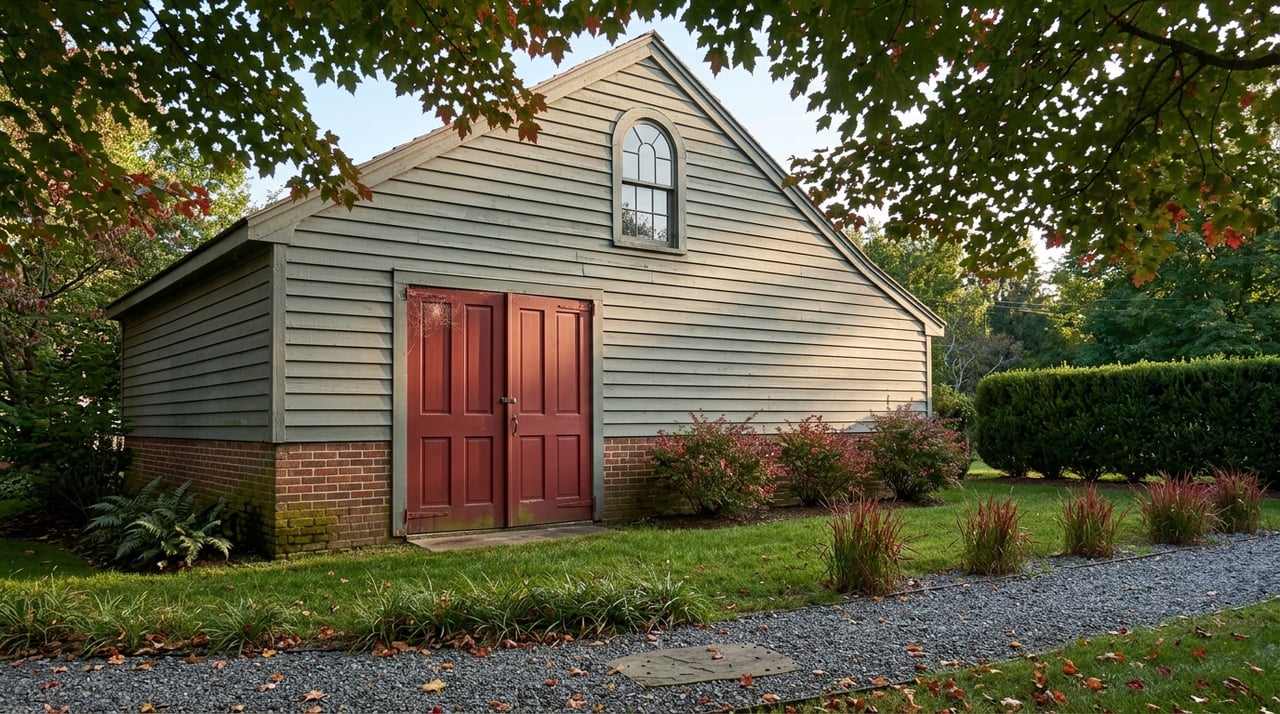
As Newton Beacon reported, Lizbeth Heyer started building an accessory apartment on her Auburndale property in January 2026. By the time this piece was reported in mid-August 2026, the unit was weeks from finished, a 1,030-square-foot ADU. The permitting alone, before a single stud went up, took nine months. The total bill topped $500,000.
According to Mass.gov, Massachusetts made accessory dwelling units legal by right statewide in February 2025. Newton has been ahead of that curve for decades; Newton Beacon reported that the city has allowed ADUs since 1987, and it rewrote its own ordinance again in April 2025 to go further than the state floor requires. And when Newton Beacon examined the city's own numbers in January 2025, fewer than one percent of Newton's single- and two-family homes had one. Heyer's project, reported by the same outlet a year and a half later, is a useful case study in permitting challenges that can arise beyond zoning.
Beyond Zoning: Other Steps in the Process
Newton's city council passed two sets of amendments on April 22, 2025. The first, approved unanimously, aligned the city's rules with the new state law. The second, a package of changes sponsored by a councilor named Albright, passed 18-6 and pushed Newton's by-right limits beyond what the state requires: Newton's ADU rules allow internal ADUs up to 1,000 square feet (or 1,200 square feet if the conversion uses an existing structure or the owner has lived there four years or more), and detached ADUs on the same sliding scale, with a special permit path available up to 1,500 square feet for anyone who wants more.
On paper, that's about as generous as ADU zoning gets in Greater Boston. As of that January 2025 count, Newton had 122 ADUs total, almost three-quarters of them internal conversions, and most of the detached quarter sit inside historic carriage houses, meaning the easiest path has mostly been used already by the properties built to make it easy. That count is a pre-ordinance snapshot; Heyer's later permitting file illustrates challenges that can arise beyond zoning.
By-right zoning does not eliminate every other permitting step for an ADU project.
What Actually Slowed Heyer's Project Down
Heyer's ADU was going into an existing garage, a use that seemed to fit squarely inside the by-right rules. Three separate issues surfaced anyway, each one downstream of the zoning question rather than part of it.
- The garage already had a decades-old zoning variance, granted years earlier to make it accessible for a wheelchair van. That variance covered accessibility use, not residential use, so it had to be formally amended before the ADU plans could move forward.
- Once the design was drawn, it exceeded Newton's floor-area-ratio limit, which triggered a special permit hearing before the city's land use committee and, ultimately, the city council.
- In the process of digging through the property's paperwork, Heyer discovered that her house had only ever received a temporary certificate of occupancy after a clerical error more than twenty years ago. She had to ask the building commissioner to write a letter confirming legal occupancy before the ADU permit could proceed, a step that added another month on its own.
A separate Newton project, a carriage house conversion handled by a local contractor named Guthrie, cleared permitting without those complications and still ran into an unbudgeted expense mid-build: bringing sewer and water lines back out to the street required a civil engineer to design the layout. Two different projects, two different complications beyond zoning.
Stormwater Review and ADU Project Costs
According to Newton's stormwater resources page, the city charges every residential property a flat $148.54 a year in stormwater fees regardless of what's on the lot. The annual fee is separate from individual stormwater management review, which is triggered by new construction over 400 square feet. Local builders describe Newton's stormwater standards as stricter than what they see in neighboring towns, and it's the kind of review that rarely shows up in the rough budget a homeowner sketches out before calling a contractor.
Newton ADU Construction Costs
| Project type | Typical cost range | What tends to push it higher |
|---|---|---|
| Garage conversion | roughly $120,000 to $220,000 | sewer or water lines run back to the street; structural issues in an older garage |
| New detached build | roughly $250,000 to $450,000 | stormwater engineering once footprint passes 400 square feet; site work on a sloped or tight lot |
| Garage conversion with legal complications | Heyer's project ran past $500,000 | zoning variance amendment, floor-area-ratio special permit, certificate-of-occupancy correction |
On the revenue side, industry cost trackers following the Greater Boston market put a one-bedroom garage-conversion unit renting for roughly $2,200 to $2,800 a month, and a larger two-bedroom unit closer to $3,100 to $4,200 a month. Those figures help explain why the math works for some owners and not others once the full build number is on the table.
Newton's ADU Design Programs
The city's planning department has said plainly that cost is the main thing keeping ADUs rare even where the zoning welcomes them. In response, Newton launched Backyard Blueprints, a design competition funded through an AARP Community Challenge Grant, meant to build a gallery of pre-reviewed detached ADU plans homeowners can purchase for a flat fee instead of commissioning custom architecture from scratch.
That program is distinct from a separate, statewide effort, the Massachusetts ADU Design Challenge, run by the state's Executive Office of Housing and Livable Communities and funded through private philanthropy, including AIA Massachusetts, Eastern Bank Foundation, the Massachusetts Housing Partnership, and the Boston Foundation. That statewide contest announced its winners in May 2026 and now offers free, downloadable ADU plans to any homeowner in the Commonwealth. The two programs are easy to conflate, but a Newton homeowner working through permitting will want to know which library they're pulling from and which set of rules applies.
Statewide, officials reported more than 1,200 ADU building permits issued in 2025, against a goal of 8,000 to 10,000 built over the next decade. MassHousing has also introduced a financing program aimed at income-eligible homeowners to help close the gap between what an ADU costs and what a typical household can self-fund, one more sign that the state sees the money and the paperwork, not the zoning, as the real project.
What This Means If You're Looking at a Newton Property
If you're evaluating a listing that mentions ADU potential, or you already own in Newton and want to know if the numbers work, treat "by right" as a starting point rather than a green light. Before you assume a garage, basement, or carriage house can become a legal rental unit, it's worth checking:
- Whether the structure carries any old variance on file, since Heyer's accessibility variance from decades ago had to be reopened before her ADU permit could move
- Whether the home's certificate of occupancy on record is final or temporary, particularly on anything built or altered twenty or more years ago
- How much impervious surface already exists on the lot, since crossing 400 square feet of new footprint pulls the project into individual stormwater engineering
- Whether the property is on city sewer or septic, since septic capacity adds a separate and slower layer of review
- Whether the lot sits in one of Newton's historic districts, where most of today's detached ADUs already live inside converted carriage houses
For buyers weighing a Newton property partly on its income or multigenerational potential, that diligence belongs in the offer stage, not after closing. For owners thinking about adding one before a future sale, a nine-month permitting timeline is not a pre-listing project you start the same season you plan to list. It's a decision to make a year or more ahead of time.
A Few Questions Newton Owners Ask Before They Start
Does by-right mean I skip permitting entirely? No. By-right removes the discretionary special permit hearing for qualifying projects, but if your plans exceed the floor-area-ratio limit, a special permit can still land on your desk even under the new rules.
Can I rent a Newton ADU short-term through a site like Airbnb? No. According to Backyard ADUs, Newton requires a minimum 30-day rental period for accessory dwelling units, so short-term rental use isn't permitted.
Will adding an ADU change what I owe if I sell later? Finished living space typically factors into a property's assessed value at the city's next review, so it's worth checking with Newton's assessing department early in the process rather than assuming the number stays flat, and this isn't a substitute for advice from your accountant or attorney on your specific situation.
If you're trying to figure out whether a Newton property's ADU potential is real or just a line in the listing description, that's exactly the kind of diligence Eric Glassoff has spent more than two decades running for buyers and owners across Newton and Brookline. Schedule a free neighborhood consultation and let's look at what a specific lot can actually support before you write an offer or break ground.
This article is general information, not legal, tax or financial advice. Consult a qualified professional about your situation.