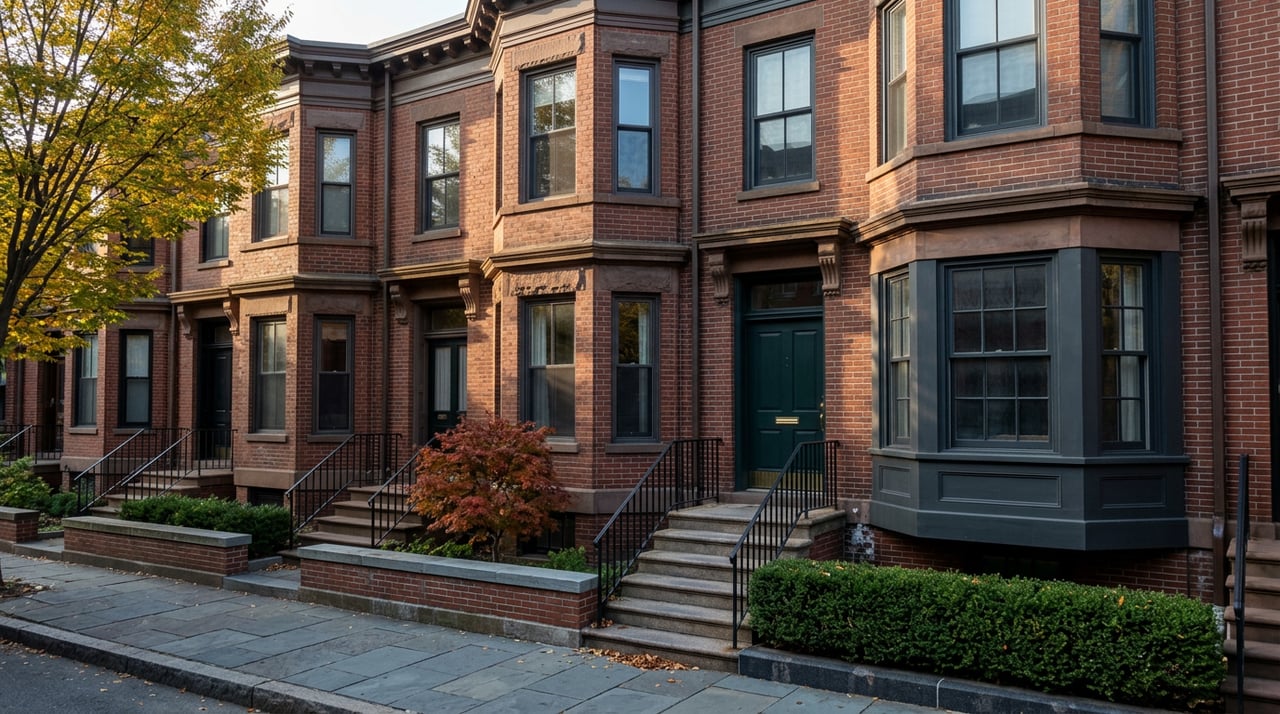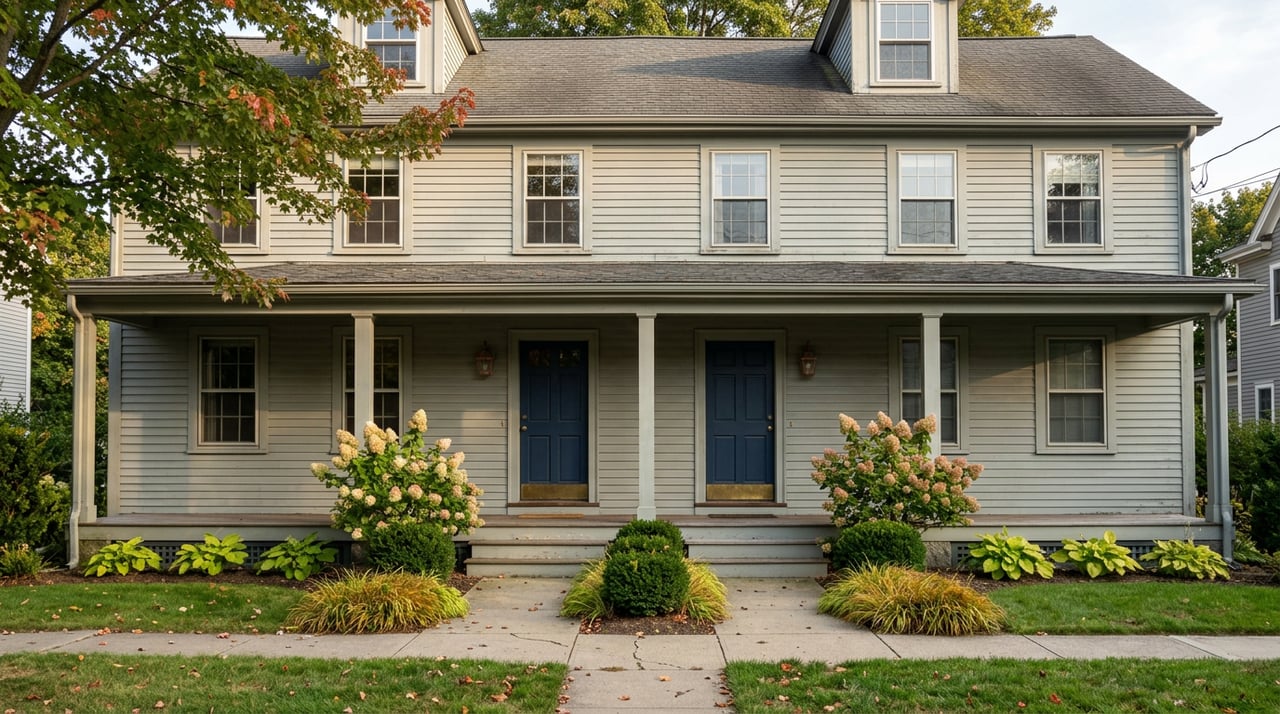
A buyer finds a two-family conversion in Newtonville that checks every box. Two floors of a pre-war house, split cleanly into a pair of condo units, priced right, close to the Mass Pike and the T. The inspection comes back clean. The offer gets accepted. Then, three weeks into underwriting, the loan officer calls back with a problem that has nothing to do with the buyer's credit, income, or down payment. It has to do with a line item on the association's one-page annual budget that the association had not yet revised.
That is the shape of the friction worth understanding before you write an offer on a small Newton condo this fall. It is not about price or condition. It is about a federal underwriting standard that moved in the spring of 2026 and is still working its way through boards, budgets, and closings right now. The buildings most exposed to it are exactly the kind that make up a large share of Newton's condo inventory: small, self-managed conversions of two, three, or four units that have never carried a formal reserve line item.
The Rule Change Affecting Newton's Small Condo Boards
On March 18, 2026, Fannie Mae and Freddie Mac released updated condominium project review standards, issued as Lender Letter LL-2026-03 and a corresponding Freddie Mac bulletin. Most conventional lenders use these standards as their baseline when deciding whether a unit in a given building can be sold on the secondary mortgage market, which in practice determines whether a buyer gets a normal 30-year fixed rate or something more expensive.
Two changes in that update matter for a Newton buyer. First, the Condominium Law Update: New Reserve Requirements and More reports that the minimum reserve contribution benchmark rose from 10% of the association's annual budget to 15%. Second, master property insurance policies are now capped at a $50,000 maximum deductible per unit, a change that took effect July 1, 2026 and replaced a more complicated calculation that used to require adding up every unit's individual deductible exposure. Roofs can now be insured on an actual cash value basis instead of the stricter replacement-cost requirement that used to apply.
None of this is Massachusetts law. It is a lending standard. But for any buyer using a conventional mortgage, the lending standard functions as the law of the transaction, because it decides whether the loan clears underwriting at all.
| Requirement | Before March 2026 | After the update |
|---|---|---|
| Minimum annual reserve contribution | 10% of budget | 15% of budget |
| Master policy deductible cap | Calculated from total unit deductibles | Flat $50,000 cap, effective July 1, 2026 |
| Roof coverage basis | Replacement cost required | Actual cash value now permitted |
Associations are meant to reflect the new reserve target in the budgets they are setting this year for 2027, which puts the deadline for fixing a gap squarely in the middle of the fall budget season many small boards are working through right now.
Three Kinds of Association Under One Rule
Newton's condo stock does not behave like one market. It breaks roughly into three shapes. There are two-unit townhouse-style conversions, often a single-family split into a pair of attached units or a new-construction duplex, run informally by the two owners with no property manager and no separate reserve account beyond whatever the two of them agree to set aside. There is a larger tier of small conversions, an older house turned into three or four units and sold off individually, usually with a volunteer trustee board and a bank account rather than a funded capital plan. And there are established, larger buildings clustered near Newton Centre, Chestnut Hill, and the stops along the Green Line and Riverside line, which tend to carry professional management and a budgeting discipline that already looks something like a real reserve policy.
Massachusetts law does not close the gap for the first two categories. Chapter 183A, Section 10(i) requires only that a condominium maintain an "adequate" replacement reserve fund, kept in a segregated account, without ever defining adequate in dollars or as a percentage. That silence is precisely why the Fannie Mae and Freddie Mac number becomes the number that decides financing outcomes. A lender underwriting a Newton condo loan is not checking the building against Massachusetts statute. It is checking the building against the investor standard, and this year that standard moved up by roughly half.
A two-unit association where the trustees are also the owners may benefit from reviewing its reserve figures before a lender requests them.
What "Non-Warrantable" Actually Costs a Buyer
When a building's budget, reserves, or insurance don't clear the current standard, the industry term is non-warrantable. It doesn't mean the building is unsafe or the loan is impossible. It means the pool of lenders willing to finance a unit there shrinks to those offering portfolio loans rather than conventional, agency-eligible mortgages, and portfolio products typically carry a higher rate, a larger required down payment, or both.
For a buyer already three weeks into a purchase and sale agreement, discovering this mid-underwriting is the worst version of the timing. A financing contingency built around a 30-day conventional approval can stretch or collapse entirely if the lender has to pivot to a different loan program after the fact. The fix, when there is one, usually involves the seller or the association producing updated budget documents, a revised reserve contribution, or proof of a compliant insurance policy, and each can require coordination by a small volunteer board.
The Paper Trail to Pull Before You Write an Offer
The documents that answer this question exist before you ever submit an offer. Request them early rather than discovering the gap during your loan contingency period.
- The current operating budget and the most recent year-end financial statement, so you can see the actual percentage of the budget allocated to reserves.
- The current reserve fund balance and any reserve study, physical or informal, that shows what major components (roof, boiler, siding, parking) are aging toward replacement.
- Board or trustee meeting minutes from the past 12 to 24 months, which often reveal a planned assessment or a funding conversation long before it shows up in a formal document.
- The master insurance policy declarations page, specifically the per-unit deductible, checked against the new $50,000 cap.
- Any written confirmation that the board has adjusted its 2027 budget planning to reflect the higher reserve benchmark.
Where the Standard May Matter Most, and Where It May Matter Less
The exposure is not evenly spread. A two-unit conversion managed by its two owners, with no property manager and no history of a reserve study, may have less formal processes for tracking lending standards. A three- or four-unit conversion sits in similar territory, often with slightly more formal bylaws but the same volunteer, part-time attention to budgeting. Buildings near Newton Centre, Chestnut Hill, or the Green Line and Riverside stops that already carry professional management are far more likely to already run a formal budget process, which means they are also more likely to already sit near or above the new 15% benchmark.
That contrast matters for how a buyer should shop. Two units with nearly identical square footage and finishes can carry very different financing risk depending entirely on which of these three categories their association falls into, and that risk rarely shows up in a listing description.
Short FAQ
Does this affect cash buyers? No. The Fannie Mae and Freddie Mac standards apply to conventional, agency-eligible financing. A cash purchase or certain portfolio loan products can sidestep the review entirely, though a future resale to a financed buyer will eventually run into the same question.
Is a small Newton condo association required to fix this before I close? Not by Massachusetts statute. Chapter 183A only requires an "adequate" reserve fund without a fixed number. The pressure comes from the lender's own project review, not from a state mandate.
Can a seller or board fix this quickly once a buyer raises it? Sometimes. A board can vote to raise the reserve line item in an upcoming budget or produce documentation showing a plan is already in motion. What it usually cannot do quickly is fund years of deferred reserve contributions retroactively, so the fastest fix is often a documented commitment rather than an instantly larger bank balance.
If you are looking at a Newton condo conversion this fall, financing questions may also turn on association records, including whether the budget reflects the updated standard. Given a background in mortgage brokering alongside two decades of closing Newton and Brookline transactions, Eric Glassoff reviews association financials before a buyer writes an offer, not after a lender raises a flag. Explore current listings on the Newton neighborhood page, run your numbers on the mortgage calculator, or schedule a free neighborhood consultation to walk through a specific building's paperwork before you're under contract.
This article is general information, not legal, tax or financial advice. Consult a qualified professional about your situation.