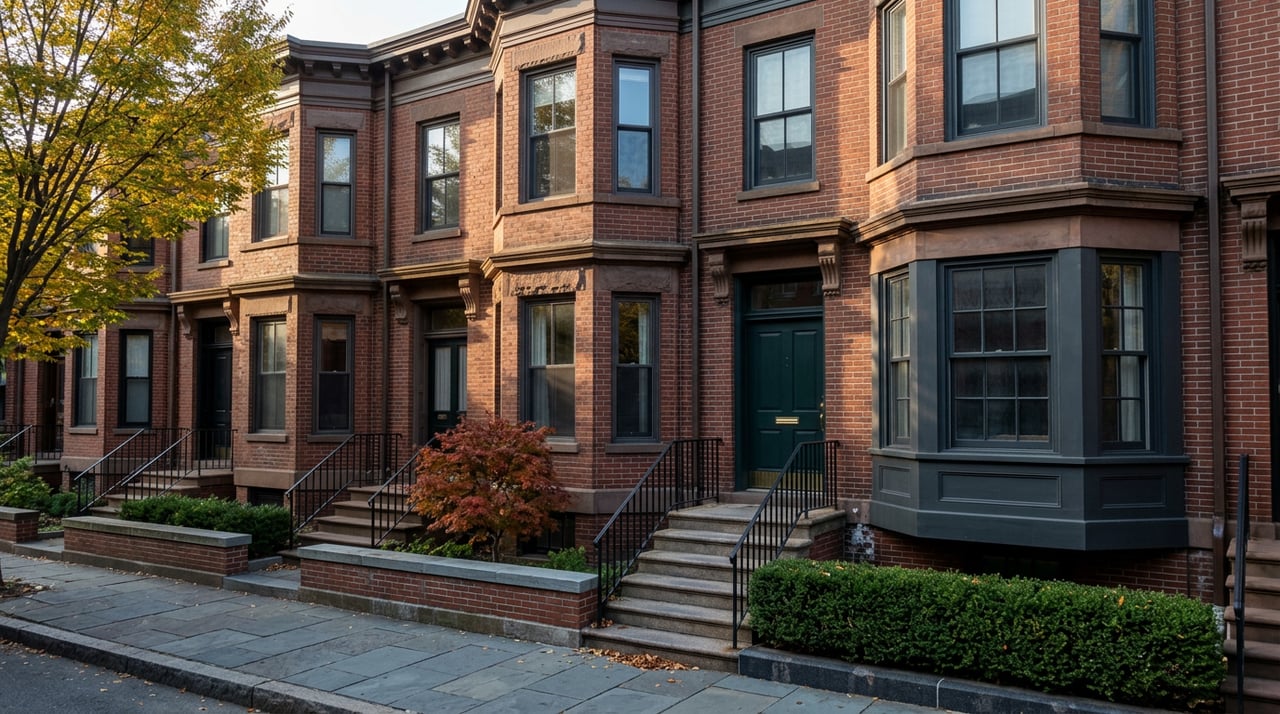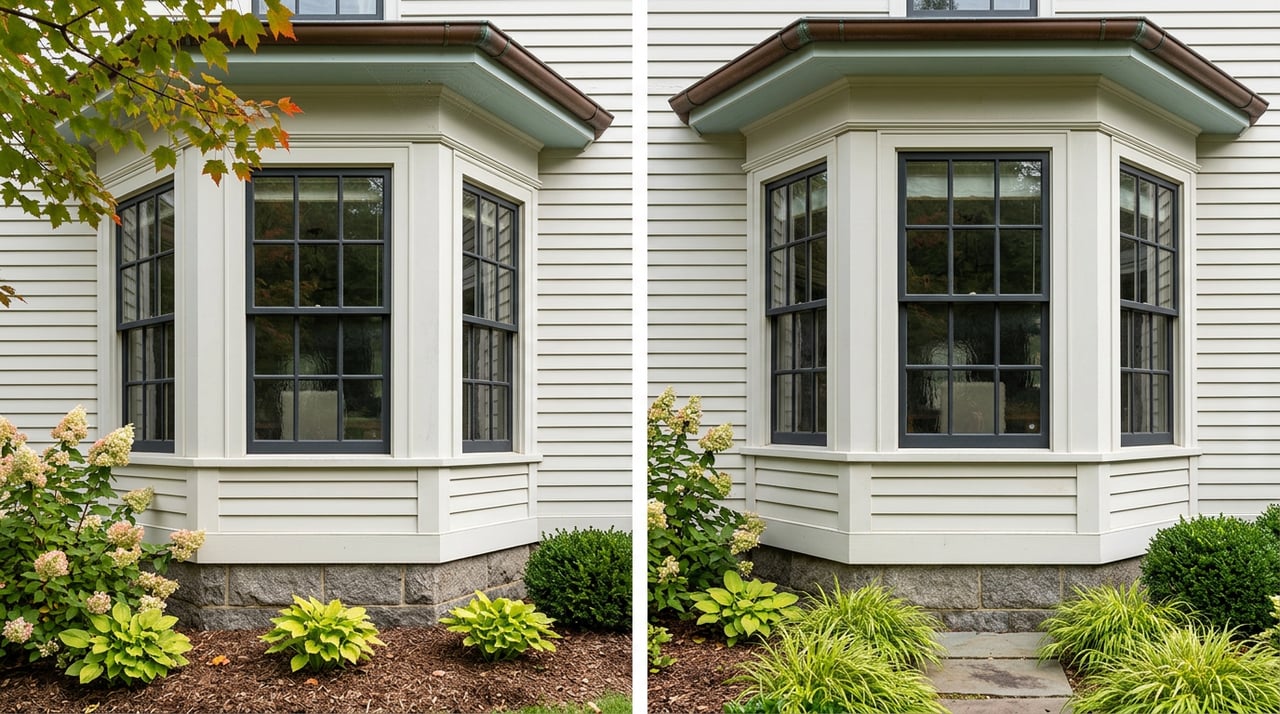
Two comparable center-entrance colonials list on the same Newton village street in September. One goes under agreement inside three weeks at a small premium. The other drifts into November, absorbs a price cut, and closes with a credit at the table. The finishes look similar in the photos. The buyers touring both homes are the same buyers. What separates the outcomes is not staging and not list price. It is what the seller did before the sign went up.
Newton is running two markets right now, and the split is wider than the citywide median suggests. State data compiled by the Massachusetts Association of Realtors and reported by GBH in late July 2026 shows more closed single-family sales, more listings, and a modest year-over-year price dip for single-family homes statewide, while luxury sales in Newton and Brookline are moving more slowly than starter inventory. Inside Newton, move-in-ready homes in Newton Centre, Waban, and Chestnut Hill are still drawing multiple offers in the low-20s on days on market. Homes that need work are sitting. The gap between those two outcomes is where sellers of pre-1940 homes either capture value or leak it.
The number that reframes the problem
Roughly 52 percent of Newton's housing stock was built before 1939. If you own a Newton single-family, the base rate says you probably own an old one. That single fact drives three friction points that a diligent buyer's team will identify inside the first ten days of a deal. Sellers who close those files before listing negotiate from a different position than sellers who wait for the inspection report.
The rest of this post walks the three items. None of them is exotic. All three routinely take small deals apart in the last week of diligence.
Friction one: the wiring conversation buyers are already having with their insurer
Knob-and-tube wiring is the default electrical system in most pre-1940 Newton homes. It is not automatically a code violation, and in undisturbed condition it can still function. The problem is not the wire. The problem is the insurance file.
A meaningful share of Massachusetts carriers will not bind a new homeowner policy on a home with active knob-and-tube, or will charge substantially higher premiums when they do. Buyers routinely learn this in the two-week window between accepted offer and purchase and sale, right when they are also negotiating the inspection response. That timing gives them leverage you did not intend to hand over.
The pre-listing move is a mapping inspection by a licensed electrician who can tell you three things: how much active knob-and-tube runs in the home, whether it is buried under blown-in attic insulation (the condition most likely to trigger an insurer's underwriting hold), and what a phased remediation would cost. A written mapping report converts an unknown into a scoped item. Buyers who see a scoped item behave differently than buyers who see an unknown. If a full rewire is not economic before listing, a partial remediation focused on insulated attic runs and a documented panel assessment is usually enough to keep the deal on rails.
Undersized service panels ride alongside the wiring conversation. Buyers running heat pumps, EV chargers, and induction ranges through diligence spreadsheets will notice a 100-amp service and price it. A pre-listing electrical assessment lets you decide whether to upgrade, price around it, or produce quotes for the buyer.
Friction two: the oil tank file the buyer's attorney will open
Newton's older heating systems ran on oil. Many of those systems have been converted, some have not, and the paper trail varies wildly. Three scenarios show up at the closing table:
The tank is above-ground in the basement and still in service. Clean. Age of tank and condition of the fill and vent lines will surface in the inspection report; a service record from the current oil company usually suffices.
The tank was converted to gas years ago but never removed. This is the common one. Buyers and their attorneys want documentation of proper decommissioning, and the Newton Fire Department's involvement in the permit history matters. If the chimney was never relined after conversion, condensation from a high-efficiency gas appliance is a separate item the inspector will flag.
The tank is or was underground. This is the case where a pre-listing file matters most. Buyers of Newton homes have long memories about underground tank claims, and their lenders sometimes have longer memories than they do. A close-out letter, permit records, and any soil testing from the removal go into the listing binder. Absence of paperwork does not mean a problem exists. It means the buyer's team will assume one until proven otherwise, and the timing of that proof usually falls inside the inspection response window where every day costs you leverage.
If you do not know which of the three scenarios describes your home, that is itself the finding. Order the file from the Newton Inspectional Services Department and the Fire Prevention office before the photographer shows up.
Friction three: Newton's 26F rules are not the state minimum
Massachusetts General Law Chapter 148 Section 26F requires sellers to obtain a smoke and carbon monoxide certificate of compliance before a sale of most residential properties, and the Department of Fire Services consumer guide explains the statewide baseline. Newton adds its own rules on top of that baseline, and sellers who assume "we already have detectors" routinely fail the first inspection.
The Newton Fire Department publishes its residential inspection requirements on the city's Fire Prevention page. Read closely, and a few items catch sellers off guard:
- Detectors must be mounted on the ceiling per Newton City Ordinance Chapter 10 Section 10-11. Wall-mounted detectors that pass in other Massachusetts towns will not pass here.
- All smoke detectors must be photoelectric and within ten years of the manufacture date printed on the back.
- Any detector manufactured after 2016 must have a sealed ten-year battery. Nine-volt swap-outs will not clear the inspection.
- Residential inspections are booking roughly two weeks out, on Mondays, Tuesdays, Thursdays, and Fridays between 9 a.m. and noon. The city recommends booking a month before your closing date.
- A substantial renovation, defined as work affecting one-third of the assessed size or value, or any work that adds or modifies a bedroom, can trigger current-code requirements across the entire home rather than just the renovated area.
That last item is the one that most often blows up a Newton file. A previous owner added a bedroom in a 1998 attic conversion. The current smoke detector layout satisfied the code in effect then. On resale, the substantial-renovation trigger can pull the entire home up to current requirements, and the seller finds this out three days before closing. Inspection booking lead time compounds the problem.
Lead paint sits over the top of all of it
Because so much of Newton's stock predates 1978, nearly every seller is obligated to deliver the Property Transfer Lead Paint Notification before the purchase and sale agreement is signed. The state's page on the notification lays out the specifics, and non-compliance carries civil penalties. This is not a Newton-specific rule, but the combination of Newton's pre-1978 base rate and the ten-day buyer inspection window it opens is a scheduling item worth building into your listing timeline rather than absorbing during offer review.
Massachusetts remains a caveat emptor state on most other conditions. That is a legal baseline, not a strategy. What you choose to disclose voluntarily, particularly on wiring, oil tanks, and prior renovation permits, is a positioning decision. On the sitting side of Newton's split market, voluntary transparency is often what moves a home from "needs work" pricing to "ready" pricing.
A 60-day pre-listing sequence
Working backward from a target list date, sellers of pre-1940 Newton homes tend to get the best outcomes on this order of operations:
- Day 60 to 45: Pull the property's permit history and any oil tank records from Newton Inspectional Services and the Fire Department. Identify gaps.
- Day 45 to 30: Commission an electrical mapping inspection. Get a written scope and phased-remediation quote. Decide whether to remediate before listing or price around a documented scope.
- Day 30 to 21: Book the Newton smoke and CO inspection window. Replace any detectors that are non-photoelectric, wall-mounted, over ten years old, or lacking the sealed ten-year battery where required.
- Day 21 to 14: If the chimney was ever converted from oil to gas, confirm relining status. Complete the Property Transfer Lead Paint Notification package for use at offer.
- Day 14 to list: Assemble the seller's binder: permit history, tank documentation, electrical mapping report, chimney records, and the smoke and CO certificate.
The point is not to fix everything. The point is to convert unknowns into scoped items before a buyer's team scopes them for you.
Short FAQ
Does Newton require a Title 5 septic inspection at sale? Most Newton properties are on public sewer, so Title 5 does not apply. If your home is on a private septic system, the state inspection rules do apply and the timing needs to be built into your listing calendar.
Is knob-and-tube wiring a legal defect I have to disclose? Massachusetts does not treat it as a mandatory disclosure item outside of the lead paint and septic statutes. If a buyer asks, you must answer truthfully. Voluntarily documenting the wiring status often improves the negotiation more than staying silent.
How late can I schedule the Newton smoke and CO inspection? Newton's Fire Prevention office suggests booking about a month before closing. With inspections currently booking two weeks out on limited weekday morning windows, waiting until the last week is the most common cause of a delayed closing on an older Newton home.
Working with a broker who has run these files before
The three frictions in this post are boring on paper and expensive at the closing table. Sellers who prepare the file before the photographer arrives set the terms of the inspection response instead of reacting to it. That is the difference between the two colonials at the top of this post.
If you are thinking about listing an older Newton home this fall and want a candid read on which pre-listing items will actually move your price, Eric Glassoff works these files across Newton and Brookline every season and can walk your home before you commit to a timeline. Schedule a free neighborhood consultation to get started.